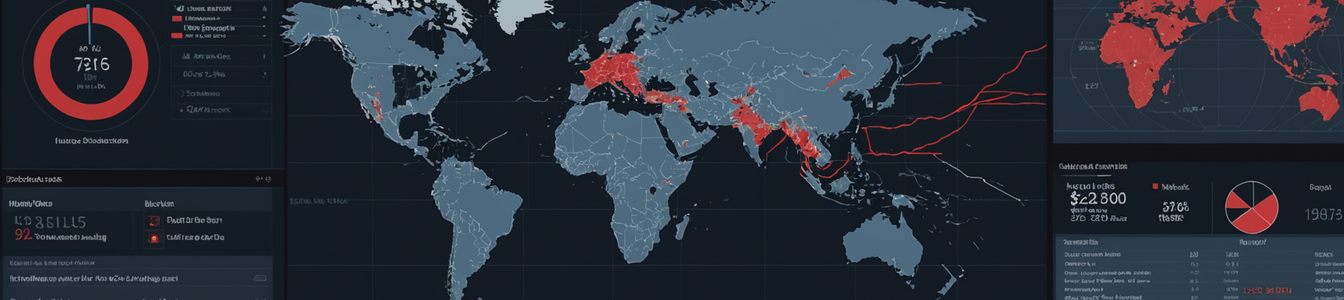
In a development that has sent shockwaves through Washington's national security circles, the Congressional Budget Office (CBO) has fallen victim to a sophisticated cyberattack attributed to foreign state actors. The breach, which targeted one of the most critical components of the US legislative process, potentially compromises sensitive financial data and economic analyses that form the foundation of congressional decision-making.
The CBO serves as the nonpartisan analytical arm of Congress, providing essential cost estimates and economic impact assessments for all proposed legislation. Its compromised systems contain detailed budgetary projections, economic models, and sensitive financial information that could provide foreign adversaries with unprecedented insight into US policy planning and economic strategy.
According to cybersecurity professionals familiar with the investigation, the attack bears the hallmarks of an advanced persistent threat (APT) campaign, characterized by sophisticated infiltration techniques and extended dwell time within the targeted networks. The attackers demonstrated deep understanding of government financial systems and legislative processes, suggesting either extensive reconnaissance or insider knowledge of CBO operations.
The timing of the discovery raises particular concerns, as the CBO is currently analyzing several major legislative packages with significant economic implications. Compromise of this analysis could allow foreign actors to anticipate market movements, understand US strategic economic priorities, and potentially manipulate legislative outcomes through strategic information warfare.
Government cybersecurity agencies, including CISA and the FBI, have initiated a comprehensive investigation to determine the full scope of the breach. Preliminary findings suggest the attackers may have accessed systems containing preliminary economic forecasts, infrastructure investment analyses, and sensitive budget reconciliation documents.
The incident represents the latest in a series of sophisticated attacks targeting US government financial systems. Security experts note that foreign intelligence services have increasingly focused on economic and financial targets as part of broader strategic competition. The CBO breach follows similar incidents targeting Treasury Department systems and Federal Reserve data repositories over the past two years.
Congressional leaders from both parties have expressed grave concerns about the security implications. The House and Senate intelligence committees have been briefed on the incident, with lawmakers calling for immediate security reviews of all congressional support agencies and enhanced cybersecurity funding for legislative branch systems.
The breach highlights ongoing challenges in securing government financial infrastructure against determined nation-state actors. Despite increased cybersecurity investments following previous incidents, government systems remain attractive targets due to the strategic value of the information they contain.
Cybersecurity professionals emphasize that protection of legislative financial systems requires specialized approaches beyond standard enterprise security measures. The unique nature of CBO's work – combining sensitive economic data with legislative timetables – creates particular vulnerabilities that sophisticated adversaries are well-positioned to exploit.
As the investigation continues, security teams are working to contain the breach and assess the full extent of data compromise. The incident serves as a stark reminder of the evolving threats facing democratic institutions and the critical importance of securing the financial infrastructure that underpins legislative governance.
The CBO attack underscores the need for continuous security modernization in government systems and highlights the strategic value that adversaries place on understanding US economic planning and legislative priorities. As nation-state cyber operations become increasingly sophisticated, protecting the analytical foundations of democratic decision-making has never been more critical.
Comentarios 0
Comentando como:
¡Únete a la conversación!
Sé el primero en compartir tu opinión sobre este artículo.
¡Inicia la conversación!
Sé el primero en comentar este artículo.