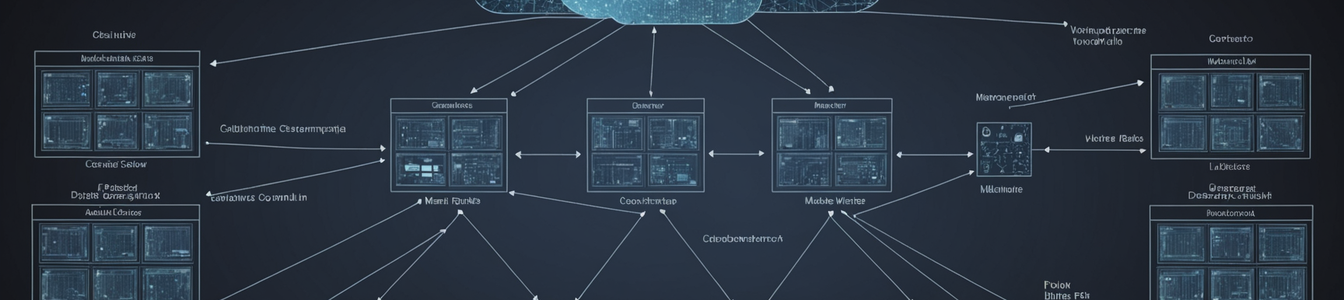
A new and formidable threat has emerged in the cloud security landscape with the discovery of VoidLink, a never-before-seen Linux malware framework of exceptional sophistication. Unlike commonplace Linux threats, VoidLink represents a paradigm shift, being a purpose-built, modular framework designed for stealthy, persistent espionage and control within cloud and containerized environments. Its architectural complexity and advanced evasion capabilities point to a highly skilled, well-resourced adversary, likely operating with strategic, state-aligned objectives.
The core of VoidLink's danger lies in its modular plugin-based design. The framework operates with a lightweight core implant that establishes a foothold on the compromised system. This core component is then capable of dynamically loading and executing additional functional modules delivered from its command-and-control (C2) servers. This architecture allows the threat actors to tailor the malware's functionality on-the-fly, deploying tools for specific tasks such as credential harvesting, lateral movement, network reconnaissance, or data exfiltration only when needed. This minimizes the malware's footprint during dormant periods and makes static analysis significantly less effective.
Technical analysis reveals a suite of advanced evasion techniques engineered to bypass traditional security measures. VoidLink employs sophisticated rootkit-like functionality to hide its processes, network connections, and files from standard system monitoring tools. It utilizes encrypted communication channels, often blending its C2 traffic with legitimate cloud service traffic to avoid detection by network security appliances. The framework is also adept at persisting in container environments, using methods that survive container restarts and potentially leveraging vulnerabilities or misconfigurations in container orchestration platforms like Kubernetes to propagate across clusters.
The primary targets are Linux servers powering cloud infrastructure, including web servers, databases, and application hosts. The malware shows particular interest in containerized applications, seeking to embed itself within Docker or similar container runtimes. This focus indicates a clear understanding of modern IT architectures, aiming to compromise the scalable and often trusted building blocks of cloud-native applications. The ultimate goal appears to be sustained, undetected access for intelligence gathering, intellectual property theft, or as a foothold for future disruptive attacks.
For cybersecurity professionals, the emergence of VoidLink is a stark wake-up call. Defending against such a threat requires moving beyond signature-based detection. Organizations must implement robust behavioral analytics capable of identifying anomalous process behavior, unexpected network connections from cloud instances, and suspicious child process spawning. Integrity monitoring for critical system files and container images is essential. Furthermore, strict adherence to the principle of least privilege, network segmentation for cloud workloads, and comprehensive logging with centralized analysis are no longer best practices but critical necessities.
The discovery of VoidLink underscores a troubling trend: as critical infrastructure and corporate operations migrate to the cloud, advanced persistent threat (APT) groups are following. They are investing in developing specialized tools that understand and exploit the unique characteristics of cloud environments—their dynamism, their reliance on automation, and their trust models. This framework is not a crude experiment; it is a weaponized platform, signaling that cloud infrastructure is now a primary battlefield in cyber espionage and warfare. The security community must respond with equal sophistication, developing cloud-native detection and response strategies to counter this evolving, high-level threat.
Comentarios 0
Comentando como:
¡Únete a la conversación!
Sé el primero en compartir tu opinión sobre este artículo.
¡Inicia la conversación!
Sé el primero en comentar este artículo.