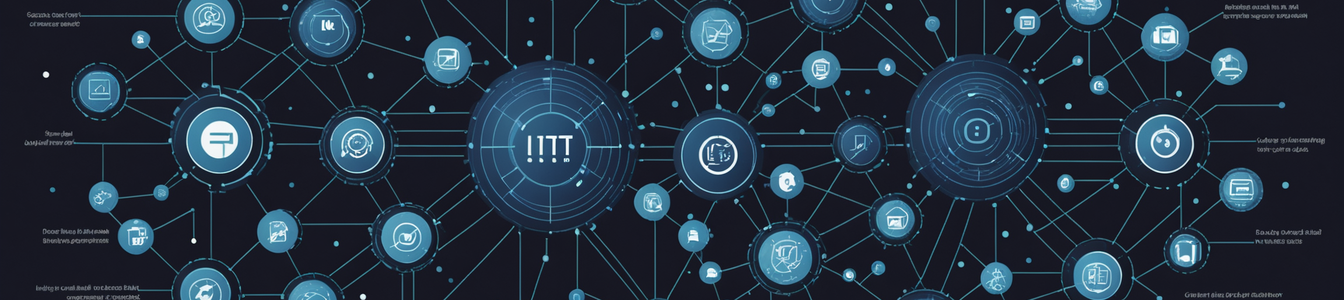
The retail industry is witnessing a technological revolution as Walmart deploys approximately 90 million IoT sensors across its global supply chain, creating what security experts are calling the largest connected logistics network in retail history. This massive IoT implementation, developed in partnership with ambient computing company Wiliot, represents a fundamental shift in how supply chain visibility and security are managed.
Wiliot's IoT Pixels represent a breakthrough in sensor technology, operating without batteries by harvesting energy from ambient radio frequencies. These postage stamp-sized sensors can monitor temperature, location, and product integrity while attached to individual items throughout Walmart's supply chain. The scale of this deployment—covering millions of products across thousands of locations—creates unprecedented operational efficiency but also introduces significant cybersecurity considerations.
Security Implications of Massive IoT Deployment
The integration of 90 million connected devices into Walmart's supply chain creates an expanded attack surface that demands sophisticated security protocols. Each sensor represents a potential entry point for cyber threats, requiring robust encryption, authentication mechanisms, and continuous monitoring. The real-time data transmission between sensors, gateways, and cloud platforms creates multiple vectors for interception or manipulation.
Supply chain security professionals must address several critical vulnerabilities:
Data Integrity Concerns: The reliance on IoT-generated data for inventory management and logistics decisions means that compromised sensors could provide false information, leading to supply chain disruptions or financial losses.
Network Segmentation Challenges: With millions of devices communicating across global networks, maintaining proper segmentation to contain potential breaches becomes increasingly complex.
Privacy Compliance: The granular tracking capability raises questions about data privacy regulations across different jurisdictions where Walmart operates.
Global Context and Parallel Developments
Walmart's initiative reflects a broader industry trend toward digital supply chain transformation. Telecom Italia recently announced a $1 billion investment through 2027 focused on data centers, artificial intelligence, cybersecurity, and IoT infrastructure. This substantial commitment underscores how telecommunications providers are building the foundational infrastructure to support massive IoT deployments like Walmart's.
Similarly, the agricultural sector is undergoing its own digital transformation, with global pressures and local demands driving adoption of IoT technologies in food supply chains. This parallel development highlights how IoT security considerations extend beyond retail into critical infrastructure sectors.
Security Best Practices for Large-Scale IoT Implementation
Security architects recommend several key strategies for managing risks in massive IoT deployments:
Zero-Trust Architecture: Implementing strict identity verification for every device and connection attempt, regardless of location within the network.
Blockchain Integration: Using distributed ledger technology to create tamper-proof records of supply chain transactions and sensor data.
AI-Powered Anomaly Detection: Deploying machine learning algorithms to identify unusual patterns in sensor behavior or data transmission that might indicate security breaches.
Regular Security Audits: Conducting comprehensive assessments of the entire IoT ecosystem, including third-party components and integration points.
Future Outlook and Industry Impact
As Walmart's deployment matures, security professionals anticipate that the lessons learned will establish new industry standards for IoT security in supply chain applications. The scale of this implementation provides valuable insights into managing security across distributed networks of connected devices.
The success of this initiative will likely influence how other retailers approach IoT integration, potentially leading to industry-wide security frameworks specifically designed for supply chain applications. Security vendors are already developing specialized solutions to address the unique challenges presented by large-scale IoT deployments in logistics environments.
Conclusion
Walmart's 90 million IoT sensors represent both the future of supply chain management and the next frontier in cybersecurity. While the operational benefits are substantial, the security implications demand careful consideration and proactive management. As more organizations follow Walmart's lead, the development of robust security frameworks for supply chain IoT will become increasingly critical to global commerce security.
Comentarios 0
Comentando como:
¡Únete a la conversación!
Sé el primero en compartir tu opinión sobre este artículo.
¡Inicia la conversación!
Sé el primero en comentar este artículo.