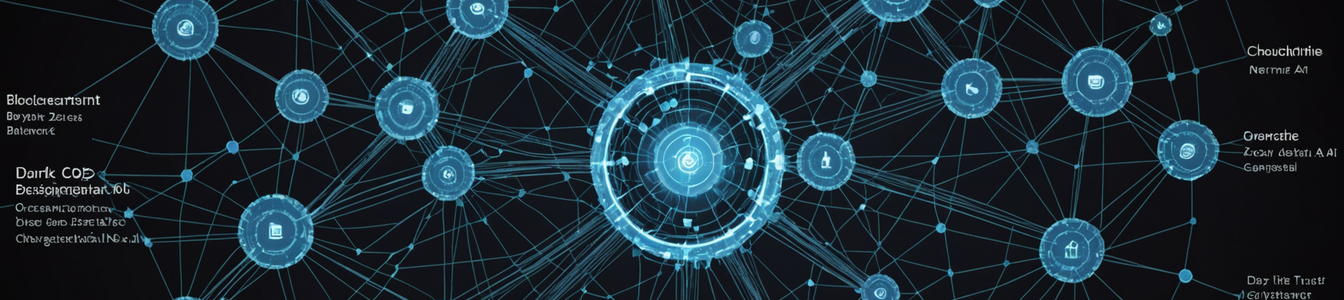
The Zero Trust security paradigm is undergoing a significant transformation as enterprises grapple with the dual challenges of hybrid infrastructure complexity and the rapid adoption of generative AI technologies. Recent developments in micro-segmentation and AI-specific security controls are reshaping how organizations approach network defense in this new era.
FireMon's strategic expansion of its micro-segmentation capabilities represents a major step forward in Zero Trust implementation. The company's enhanced platform now provides seamless integration with leading security solutions including Illumio, VMware NSX, and Zscaler. This multi-vendor approach enables organizations to implement consistent security policies across diverse environments, from on-premises data centers to cloud infrastructure and SaaS applications. The integration addresses one of the most persistent challenges in Zero Trust adoption: maintaining unified security controls in heterogeneous technology stacks.
Micro-segmentation, a cornerstone of Zero Trust architecture, is evolving beyond traditional network boundaries. By creating granular security zones within networks, organizations can limit lateral movement and contain potential breaches. FireMon's expanded ecosystem allows security teams to enforce least-privilege access policies consistently, regardless of where workloads are deployed. This capability is particularly crucial for organizations navigating hybrid work models and multi-cloud strategies, where traditional perimeter-based security approaches have proven inadequate.
Concurrently, Radware's introduction of the LLM Firewall marks a pivotal moment in AI security. As enterprises increasingly integrate large language models into their business processes, new attack vectors have emerged that traditional security solutions cannot adequately address. The LLM Firewall is specifically engineered to protect generative AI applications from threats including prompt injection attacks, data leakage, model manipulation, and unauthorized access.
The convergence of these two trends—advanced micro-segmentation and AI-specific security—creates a comprehensive defense strategy for modern enterprises. Organizations can now implement network-level controls through micro-segmentation while simultaneously protecting their AI applications with specialized security measures. This layered approach is essential in an environment where AI tools process sensitive corporate data and make business-critical decisions.
Technical implementation of these solutions requires careful planning. FireMon's platform provides centralized policy management that spans multiple security technologies, reducing operational complexity while maintaining security consistency. The system offers real-time visibility into network traffic and automated policy enforcement, enabling security teams to respond quickly to emerging threats.
Radware's LLM Firewall employs sophisticated detection mechanisms to identify malicious activity targeting AI systems. The solution analyzes input prompts for potentially harmful content, monitors output for data leakage, and prevents unauthorized model interactions. This specialized protection is becoming increasingly necessary as attackers develop more sophisticated techniques to exploit AI vulnerabilities.
The business impact of these advancements is substantial. Organizations implementing comprehensive Zero Trust strategies with integrated micro-segmentation and AI security report significant reductions in security incidents and improved compliance with data protection regulations. The ability to secure both traditional infrastructure and emerging AI applications provides a competitive advantage in digital transformation initiatives.
Looking forward, the integration of micro-segmentation and AI security will likely become standard practice for enterprise security architectures. As AI technologies continue to evolve and become more deeply embedded in business processes, the need for specialized security controls will only increase. Security leaders should consider both network segmentation and AI protection as essential components of their Zero Trust roadmap.
Implementation best practices include conducting thorough risk assessments to identify critical assets, developing phased deployment plans, and ensuring adequate staff training. Organizations should also establish clear metrics to measure the effectiveness of their Zero Trust implementations, including reduced attack surface, improved incident response times, and enhanced compliance posture.
The evolution of Zero Trust from a network-centric concept to a comprehensive security framework encompassing both infrastructure and applications reflects the changing nature of enterprise technology. By embracing these advanced security capabilities, organizations can confidently pursue innovation while maintaining robust protection against evolving threats.
Comentarios 0
Comentando como:
¡Únete a la conversación!
Sé el primero en compartir tu opinión sobre este artículo.
¡Inicia la conversación!
Sé el primero en comentar este artículo.