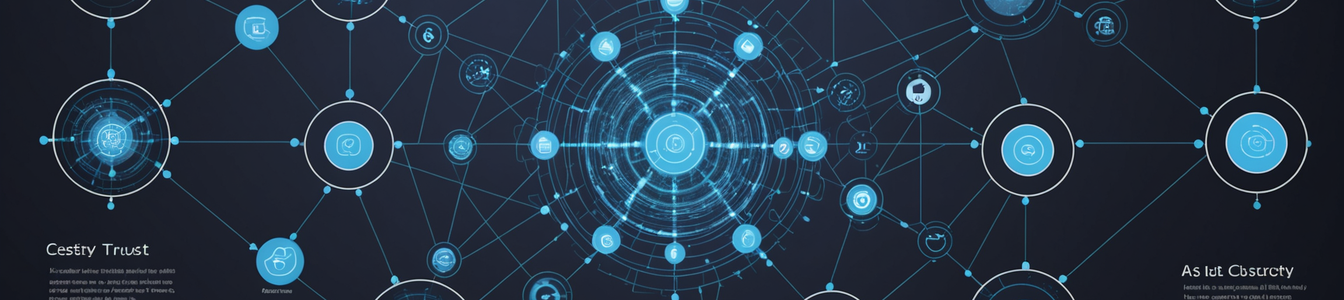
The zero trust security landscape is undergoing a fundamental transformation as organizations grapple with the unique security challenges posed by cloud native environments, artificial intelligence workloads, and serverless computing architectures. Traditional perimeter-based security models are proving inadequate for protecting dynamic, ephemeral workloads that span multiple cloud environments and communicate through complex microservices architectures.
Recent industry developments highlight a strategic shift toward workload identity management and runtime protection frameworks specifically designed for modern cloud infrastructures. Aviatrix's introduction of Zero Trust for Workloads represents a significant advancement in cross-cloud security enforcement, providing organizations with granular control over workload communications across hybrid and multi-cloud environments. This approach moves beyond traditional network segmentation to implement identity-based security policies that travel with workloads regardless of their deployment location.
The platform's architecture addresses critical security gaps in AI and cloud native applications by implementing continuous verification and least-privilege access controls at the workload level. This is particularly crucial for organizations deploying large language models and AI agents that require secure inter-service communication while maintaining strict data protection standards.
Simultaneously, Red Hat's agentic AI strategy is tackling enterprise AI ROI challenges through enhanced security frameworks that integrate zero trust principles directly into the AI development lifecycle. By embedding security controls at the agent level, organizations can ensure that AI-driven applications maintain compliance and security posture even as they scale across distributed environments.
Financial services institutions are at the forefront of adopting these advanced security approaches. The Depository Trust & Clearing Corporation (DTCC) has demonstrated how Kubernetes security innovations can enable both velocity and robust protection in production financial environments. Their implementation showcases how zero trust principles can be applied to containerized workloads while meeting the stringent regulatory requirements of the financial sector.
The convergence of these developments points toward a future where security is inherently built into the workload lifecycle rather than bolted on as an afterthought. As organizations increasingly rely on cloud native technologies and AI-driven applications, the ability to maintain consistent security policies across diverse runtime environments becomes paramount.
Key technical innovations driving this evolution include dynamic identity management systems that can automatically generate and rotate credentials for short-lived workloads, context-aware policy engines that adapt security controls based on workload behavior, and real-time threat detection capabilities that leverage machine learning to identify anomalous activity within complex application architectures.
For cybersecurity professionals, these advancements represent both opportunities and challenges. The shift toward workload-centric security requires new skill sets and tools for managing identity and access controls at scale. Security teams must develop expertise in cloud native technologies, container security, and AI system protection to effectively implement zero trust architectures in modern environments.
The industry is also seeing increased collaboration between cloud providers and security vendors to create integrated solutions. Programs like AWS Startups: Building with Llama are fostering innovation in secure AI deployment, enabling startups to leverage advanced security frameworks while accelerating time-to-market for their solutions.
As zero trust continues to evolve, organizations must consider several critical factors for successful implementation. These include the ability to maintain consistent security policies across hybrid environments, the integration of security into DevOps workflows, and the development of comprehensive monitoring and response capabilities for workload-level threats.
The future of zero trust in cloud native environments will likely see further integration with emerging technologies such as confidential computing, hardware-based security enclaves, and advanced cryptographic techniques for securing AI model inference and training processes. These innovations will enable organizations to maintain security and compliance even as their technology stacks become increasingly complex and distributed.
For security leaders, the message is clear: the evolution toward workload identity and runtime security represents not just a technological shift but a fundamental rethinking of how security integrates with modern application development and deployment practices. Organizations that successfully navigate this transition will be better positioned to leverage cloud native technologies and AI capabilities while maintaining robust security postures in an increasingly complex threat landscape.
Comentarios 0
Comentando como:
¡Únete a la conversación!
Sé el primero en compartir tu opinión sobre este artículo.
¡Inicia la conversación!
Sé el primero en comentar este artículo.